Coalition promotes co-op model to transform P.R.’s electrical system


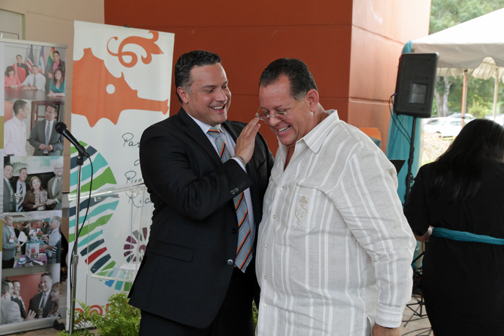
From left: Luis Alonso-Vega, and energy coordinator Sergio Santos-Rodríguez during a meeting with the press.
The Coalition for Energy Cooperation in Puerto Rico, which promotes the cooperative model as an alternative to transform the power system, asked the Senate to stop the fast-tracked process of privatizing the Puerto Rico Electric Power Authority’s assets and convene an independent panel of experts to identify the public and private sectors’ needs.
The independent panel proposed to the newly created Senate Energy Commission should include experts in engineering and electrical engineering, renewable energy, sociology, environment, finance, and economics, to determine the best model to achieve the goals established in an energy plan, said Luis Alonso-Vega, a member of the CCEPR, as the organization is known in Spanish.
In addition, the voices of PREPA employees and management should be heard, because they are the ones who know how the current energy system works, he said.
“The fast-track method is being used to sell PREPA, the island’s most important company, which is essential for our people’s economic and social development,” Alonso-Vega said.
The government and the Financial Oversight and Management Board for Puerto Rico propose selling the energy generation assets to four foreign companies that would divide the island among them, he said.
“We propose the cooperative business model — under one or more cooperatives — in which all clients and workers would become collective owners of all functions of this important company,” said Alonso-Vega.
The privatization of energy production to private for-profit companies has proven to be detrimental in the United States, and European countries like Spain and Latin America, he said.
“None of these countries have privatized all of their energy production as it is intended to do in Puerto Rico. In the United States, private companies coexist with the public and cooperative sectors that continue to produce energy at lower rates than those in the private sector,” Alonso-Vega said.
“Private companies will have to compete with nonprofit companies and will be forced to keep their rates down,” he said.