EPA set to finish collection of hazardous household materials in P.R., April 13

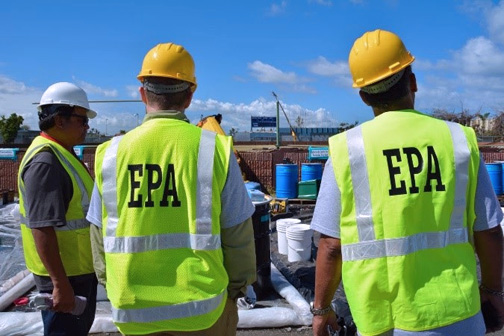
EPA’s hazardous household waste team at Toa Baja. (Credit: U.S. EPA)
As the Environmental Protection Agency continues to transition from response to recovery in its work to respond to Hurricane María, its collection of household hazardous waste in Puerto Rico is being phased out, the agency said.
The EPA will finish its islandwide, final sweep April 13, 2018. The agency is arranging special one-day collection events in select locations through April 22.
The EPA worked closely with the Federal Emergency Management Agency, the U.S. Army Corps of Engineers, the government of Puerto Rico, and local municipalities to collect, using a combination of curb-side pick-up and household waste collection days, a total of nearly one quarter of a million items.
The volume being collected has decreased dramatically and the need for this service is coming to an end, it noted.
“The EPA’s work is transitioning from immediate response to long term recovery and our household hazardous waste program throughout Puerto Rico has helped many people properly dispose of potentially hazardous items they may have stored in their homes,” said EPA Regional Administrator Pete López.
“The success of this program is a good illustration of the importance of cooperation and coordination in all levels of government to work toward a common goal: protecting the health of the people of Puerto Rico,” he said.
EPA updates its list of collection events in local municipalities on its Facebook página.
EPA is collecting household hazardous waste, electronics, and abandoned or “orphan” containers, which include drums, tanks, containers, and cylinders that were found floating in or near water bodies. In Puerto Rico, about 248,100 drums, propane tanks, cylinders and other containers have been collected to-date and prevented from reaching Puerto Rico’s landfills.
Hazardous household waste includes aerosol cans, household cleaners and chemicals, paint and electronics such as computers and televisions. Domestic hazardous materials also include batteries, which have become a major concern due to the large volume of batteries used by residents who do not have electrical service. Household hazardous waste should not be thrown away with regular trash as it can contaminate the land, bodies of water and groundwater.
In the majority of municipalities in Puerto Rico, there are collection centers for hazardous domestic waste, where residents must leave their hazardous materials. To know more details about specific collection centers, residents should contact their municipality.