El sector energético de Puerto Rico ’debe transformarse‘ tras los huracanes

NEW YORK, NY — The Puerto Rico Electric Power Authority, and the island’s energy sector as a whole, must be overhauled following the destruction caused by Hurricanes Irma and María to be more resilient and responsive to emergencies.
Such was the conclusion of energy experts who participated in the fourth listening session held by the Financial Oversight and Management Board for Puerto Rico in this city Thursday, ahead of the certification of the Commonwealth’s and PREPA’s revised fiscal plans on Feb. 23rd
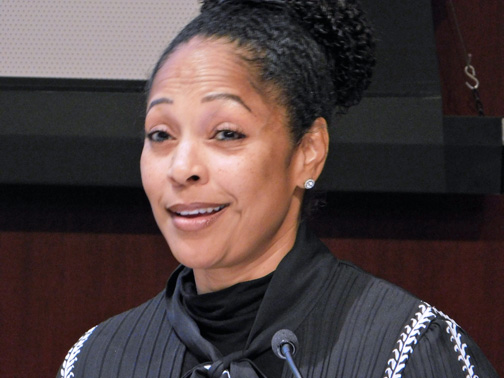
“The importance of the energy sector in Puerto Rico is directly tied to the island’s long term viability,” said Natalie A. Jaresko, executive director for the Oversight Board in her opening remarks.
“We all share the goals of reducing the cost of electricity in Puerto Rico by implementing a diverse fuel mix and improving operational efficiency, while improving the resiliency and reliability of electricity service via the announced long term concession of transmission and distribution,” she said. “The Board is committed to promoting the changes and best practices needed to achieve those goals.”
Meanwhile, Noel Zamot, revitalization coordinator for the Board, said “one thing is certain after Hurricane María, Puerto Rico’s energy sector must be transformed to serve its people well, stimulate private sector investment and enhance the island’s competitiveness.”
“Public dialogue is crucial in this respect and it is consonant with the transparency and order the process ahead should entail,” he said.
The day-long session started with a panel on recovery and restoration, during which the Oversight Board heard from representatives of the United States Army Corps of Engineers (USACE), Federal Emergency Management Administration (FEMA), New York Power Authority (NYPA), American Public Power Association and the telecom, retailers and pharmaceutical industries.
Ahsha Tribble, deputy regional administrator for FEMA Region II, had strong words for how PREPA handled the situation in the days and weeks after Hurricane María.
“First, we had a lack of trust from the partners that the government relies on for supplies. PREPA ordered numerous materials that it could not pay for,” she said. “Mutual aid works really well, we have these relationships established and have access to materials. We didn’t have that here.”
“We had some challenges with leadership, because when you put in an interim director in the middle of a disaster, it makes it hard,” Tribble said. “In an emergency, when you have eight layers of approvals to get something done, it’s not working for us.”
The utility’s liquidity issues, coupled with a grid that was not in optimal shape, was “a recipe for disaster. Being there for 125 days and watching people suffer as a result is hard. The processes that are in place right now are not conducive to dealing with an emergency in PR,” she added.
Meanwhile, Col. Donovan Ollar, of the USACE, said because portions of PREPA’s energy grid are not up to code, it has made it difficult to get those parts to fix the system.
“Lack of operational maintenance, putting a bandage on it, worked, but makes it difficult to come back and properly repair after an emergency,” he said.
As a solution, he suggested that Congress allow some flexibility with regards to the Stafford Act, limits funding and increases bureaucracy. Being able to execute quicker and not get “caught up in the bureaucracy” would enable the USACE to take certain actions toward rebuilding a resilient power network, he said.
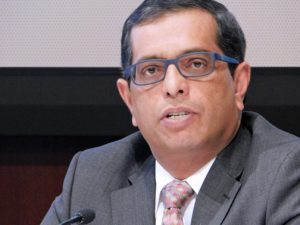
Sanjay Bose, a representative of New York’s ConEdison, explained some of the critical aspects of PREPA’s network, which the company identified during site visits right after the storm.
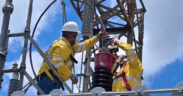
For example, he said, on the construction side, a utility pole is typically put in the ground at a depth equal to 10 percent of the pole’s length, plus two feet. Those embedments were not done correctly in Puerto Rico, which led to poles coming down, often in a domino-effect.
During a second panel, the Board gathered input on the transformation and long-term vision for Puerto Rico’s power sector from representatives of PREPA’s Governing Board and its Transformation Advisory Council, Puerto Rico’s Energy Commission, Rocky Mountain Institute, Puerto Rico Institute for Competitiveness and Sustainable Economy and the Massachusetts Institute of Technology.
In her keynote comments, Nisha Desai, a member of PREPA’s Governing Board, confirmed that the body is close to selecting a new executive director for the utility, who will not be appointed by the governor or have political ties to the island “for the first time in the utility’s history.”
The session concluded with a new technologies panel featuring stakeholders from the Puerto Rico State Office of Energy Public Policy, the Puerto Rico Senate and the renewable energy sector, followed by an open public comment period.
Zamot also announced there are seven new projects for consideration under PROMESA Title V’s Critical Projects Process (CPP) and are ready for the initial 30-day public comment period, which will be followed by the statutorily required public comment period upon release of the CPP report.
The projects, joining four already under consideration, include: M Solar Generating, LLC; Vega Serena Solar Plant; Cabo Rojo – Solar Photovoltaic Energy System; Carraizo Dam – Hydro Electric generation rehabilitation for PRASA use; Blue Beetle III PV Solar Plant At Barceloneta Substation; Repair and Mobilization of Former U.S. Navy Isla Grande Dry Dock for Servicing Commercial and Government Ships in San Juan, Puerto Rico and Viewpoint at Roosevelt.