

Top Cuban economist pessimistic on island’s prospects
diciembre 8, 2014
WASHINGTON — One of Cuba’s top experts on international finance was decidedly pessimistic when discussing the island’s economic prospects at a recent conference in Washington.
burbuja de chat0 Comentarios
visibilidad3713 Views
Report: Fiscal lessons Cuba could learn from Costa Rica
diciembre 2, 2014
WASHINGTON — Cuba, whose halting reforms have failed to energize the island’s stagnant, centralized economy, may have a thing or two to learn from Costa Rica — which over the last 30 years has made enormous strides in slashing poverty, promoting trade and luring foreign direct investment.
burbuja de chat0 Comentarios
visibilidad4274 Views
Urban planner offers tough talk on Cuba’s economic prospects
noviembre 10, 2014
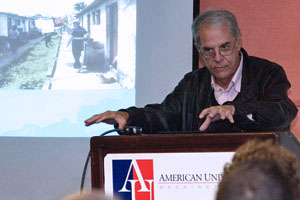
When Miguel Coyula discusses Cuba’s struggling economy, he sounds more like a Miami-based critic of the Castro regime than a retired Cuban official visiting the United States on a lecture tour, then going back home to Havana.
burbuja de chat0 Comentarios
visibilidad7380 Views
Survey: Most Americans now back Cuba policy change
marzo 7, 2014
WASHINGTON — Sen. Patrick Leahy (D-Vermont) is as liberal on the political spectrum as his Republican colleague from Arizona, Sen. Jeff Flake, is conservative. But there’s one issue both lawmakers readily agree on: it’s time to relax U.S. policy on Cuba.
burbuja de chat1 comentario
visibilidad4192 Views

Despite thawing of bilateral relations, Cuba still off-limits to most American tourists
febrero 11, 2014
Will 2014 be the year Washington finally takes Cuba off the State Department list of “terrorist-supporting states” which also includes Iran, Sudan and Syria?
burbuja de chat0 Comentarios
visibilidad4829 Views

Caribbean has high hopes for tourism recovery in ’14
febrero 3, 2014
The Caribbean will enjoy steady growth in its all-important tourism sector as the U.S. economy continues its recovery, but serious issues — ranging from violent crime in some destinations like the Bahamas and Trinidad to the widely despised U.K. air passenger duty — could prevent the region from realizing its full potential in 2014.
burbuja de chat0 Comentarios
visibilidad3895 Views

Experts discuss Cuba’s emerging entrepreneurial class
noviembre 26, 2013
Up to 40 percent of Cuba’s labor force is already working in the private sector, making the country a largely middle-class society and discrediting the notion that Fidel and Raúl Castro must die before real economic change can occur on the island.
burbuja de chat0 Comentarios
visibilidad4512 visitas
Cuba impresiona a los ejecutivos puertorriqueños en una misión comercial
21 de octubre de 2013
Las sorpresas abundaron este otoño cuando la Asociación de Fabricantes de Puerto Rico, con 1300 miembros, patrocinó su primera misión oficial a Cuba para conocer las posibles oportunidades de negocio en ese país.
burbuja de chat0 Comentarios
visibilidad4636 Views

Practical Techie: Tech in Cuba ‘ready to go supernova’
24 de septiembre de 2013
No one knows when or how it will happen, but it when it does, U.S.-based companies that do tech commerce in the Caribbean will be ready.
burbuja de chat0 Comentarios
visibilidad2549 Views

La Asociación de Fabricantes de Puerto Rico organizará un foro sobre Cuba
30 de julio de 2013
La Asociación de Fabricantes de Puerto Rico organizará un foro para debatir las oportunidades de negocio en Cuba el 2 de agosto, como anticipo a una misión educativa a la isla caribeña, según anunció la presidenta de la asociación, Waleska Rivera.
burbuja de chat0 Comentarios
visibilidad2923 Views

Cuba hopes for U.S. travel boom, as charter flights remain grounded
abril 8, 2013
A record 2.84 million tourists visited Cuba last year, up 4.5 percent from 2011 figures (by comparison, only 326,000 tourists came to Cuba in 1989). More than one million of them came from Canada, with large numbers also visiting from the United States — mainly Cuban-American exiles and those on specially licensed humanitarian or people-to-people excursions. Other important sources of tourism to Cuba are Latin America, Russia and, increasingly, China.
burbuja de chat1 comentario
visibilidad4344 visitas

P.R.-Cuba flights grounded after 3 months may resume this summer
mayo 15, 2012
Last year, California-based Cuba Travel Services launched, with great fanfare, the first direct charter flights between Puerto Rico and Cuba since the 1959 revolution that brought Fidel Castro to power.
burbuja de chat1 comentario
visibilidad5403 Views
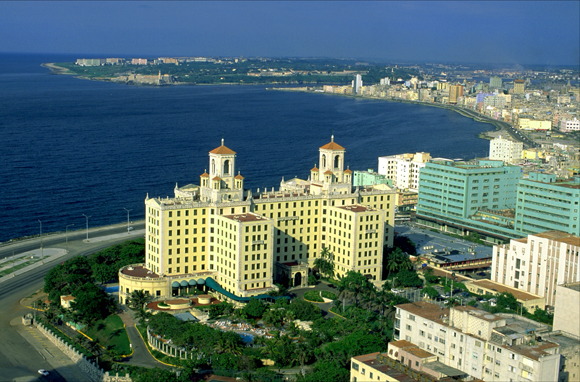
Caribbean tourism ministers welcome, not fear, end to Cuba travel restrictions
mayo 7, 2012
For years, the conventional wisdom was that an eventual end to the U.S. embargo against Cuba would open the floodgates for millions of curious Americans dying to visit the once-forbidden island — while the rest of the Caribbean would, at least initially, suffer a sharp downturn in U.S. tourist arrivals.
burbuja de chat0 Comentarios
visibilidad4347 Views
Ponce Catholic Univ. to host Cuba conference
abril 2, 2012
The Cuban government’s recent economic reforms and the growth and development opportunities they represent for the island's future will be the topic of a conference to be hosted by the Pontifical Catholic University in Ponce, entitled “Cuba Today and Tomorrow: Economic Conditions and Trends.”
burbuja de chat0 Comentarios
visibilidad3035 Views
Cuba Travel Services to launch LMM-Havana charter flights
agosto 5, 2011
Air travel between the United States and Cuba is about to get a bit more crowded with the announcement Thursday by Cuba Travel Services Inc. that it has received landing permission by the government of the island-nation to begin flights from San Juan, Ft. Lauderdale and Houston.
burbuja de chat1 comentario
visibilidad3954 Views
- ...
- 1
- 2
- 3
- Siguiente »

Proveedor de contenido de Dow Jones/Factiva desde 2014.

¡Suscríbase a nuestro podcast Dollars & Sense!

NIMB EN LAS REDES SOCIALES