“Me gusta: el botón que cambió el mundo”

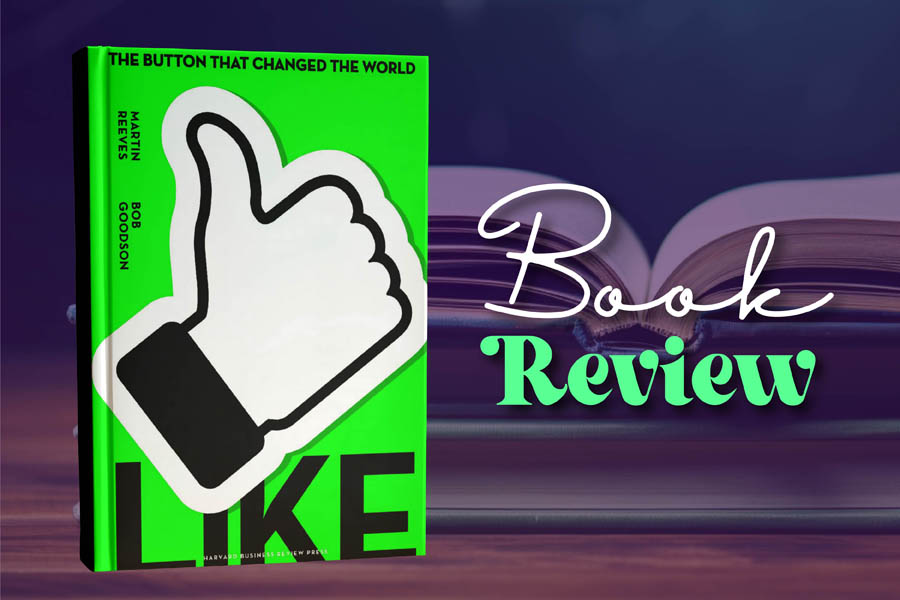
By Martin Reeves and Bob Goodson
c.2025, Harvard Business Review
$32, 288 pages
Hey, that’s nice.
It’s all good, you agree — a hundred percent approval. You wish you had it, said it, thought it, or thought of it first. You can’t argue with that. As in the new libro “Like: The Button That Changed the World” by Martin Reeves and Bob Goodson shows, it’s so good, you feel like telling the world.
You can’t help yourself.
You post something on social media — a random thought, a short story, kudos to an employee, whatever — and you’re irresistibly compelled to check back on your page 10 minutes later. Those little thumbs-up icons offer a serotonin boost, a sense of confirmation and acknowledgment, and the more you get, the happier and more confident you feel. Contrary to popular belief, though, the thumbs-up didn’t originate with Facebook.
No, the thumbs-up goes back farther — from gladiators to Fonzi, to TiVo’s remote control icons. A few years before the explosion of Facebook, there was Yelp, which Goodson had joined when its founder, a Ukrainian contemporary of Peter Thiel and Elon Musk, was first dreaming of that company. In 2005 — and he still has the dated scrap of paper to prove it — Goodson sketched a thumbs-up for Yelp that would start a revolution in user participation, data collection and social connection.
Sometime later, Facebook began using the mighty little icon, and the rest is history.
So why should you care about a one-click approval that is used, the authors say, more than 160 billion times a day around the planet?
The “like” button was not created in a vacuum; it was made with bumps and lumps and research along the path, and its making wasn’t straight-line. Its popularity wasn’t instantaneous, either; it took years for anyone to recognize the thumbs-up’s usefulness. Even so, it was a known gesture for almost everyone, and nobody had to be taught to use it. And yet, there are “consequences” to the “like” button, the extent of which we may not know for years.
It’s interesting how miffed we get when no one likes our posts, isn’t it? When they do, you rack up that count and swell with an odd sense of pride — and why? It’s not tangible, but read “Like” and, though the psychology of it is lacking a bit, you’ll see why that button’s a near-necessary (and possibly lucrative) part of doing business.
It was a long and curious trail from idea to innovation to universal, and authors Martin Reeves and Bob Goodson hold a reader’s attention while sharing the journey. What happened is a kind of history that includes subtle hints and cautions for workplaces that can use the emoji to their benefit, and not just technologically. The authors address the quirks of creativity, the need to give it time and the notion that nothing should be permanently scrapped. That’s good news for tinkerers at work and for the bosses who rely on them.
If this book were a website, you know what you’d do: find “Like.” It’s a nice read.
Nota del editor: News is my Business obtiene una pequeña comisión si haces clic en el enlace de esta publicación y realizas una compra, sin costo adicional para ti.

Authors Bob Goodson and Martin Reeves.