
H. Calero: Migration, cash crunch to limit econ. growth


Puerto Rico has lost a significant portion of its population in the last decade. (Credit: © Mauricio Pascual)
Two significant problems Puerto Rico is currently dealing with — a significant migration and a government cash crunch — will limit economic growth for at least five years, local economist firm H. Calero Consulting concluded in the most recent edition of its “Pulse” publication.
And the economy will not improve until at least 2020 unless “misaligned fundamentals” are corrected, the firm said.
One key problem that must be addressed is the shrinking population, which stood at 3.6 million last year, according to the U.S. Census Bureau. That number, however, represents about 500,000 fewer people residing on the island when compared to less than a decade ago. The migration wave is not expected to ease for another three or four years, the firm said.
“If current public policy does not change substantially and expectations continue to deteriorate through Fiscal 2016, we expect a negative demographic trend to set in that may create permanent effects similar to those experienced previously by Detroit, which lost 271,000 people from 2000 thru 2014,” the firm said in its analysis.
In its assessment, the firm said the island’s population will continue to decline until 2019, at an annual average rate of 2.3 percent. In 2020, it should reflect an upward tick, when it should be closer to 3.18 million.
“Puerto Rico’s contracting population has led to a stagnant income, both disposable and non-disposable. Were it not for a rise in transfers associated with federal recovery programs during 2008-2009, real income may have well declined,” the firm noted. “The reduction in population also creates challenges for the government in terms of declining number of taxpayers.”
The drop, coupled with last week’s start of a higher sales and use tax of 11.5 percent — the highest among all U.S. territories — will also put pressure on growth.
“Over the next few years, inflation-adjusted personal consumption should decline across the board as higher consumption taxes kick-in, discretionary spending declines [due to new limits on available deductions] and outward migration continues to erode demand,” the firm said in its publication.
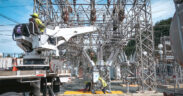
A declining population represents a strain on the demand for real estate, with prices dropping further down after the bubble burst about eight years ago. The government’s limited infrastructure spending has also put the brakes on construction, an industry that could instead benefit from revitalizing urban areas that are currently unused or in decay.
One bright spot are exports, which H. Calero Consulting said expanded at an annual average of 1.1 percent during 2000-2014, and will continue growing.
“Puerto Rico’s small size is an advantage, since local exports will be small enough, relative to the size of foreign demand. Facilitating the development and diversification of this sector in the next decade will require new export niches,” the firm said.
Under the baseline scenario, exports will contract until 2019 after which they expand at an expected rate of 1.9 percent until 2024, the firm noted.





What infrastructure spending is recommended?