US House OKs bill to protect investors in P.R., territories

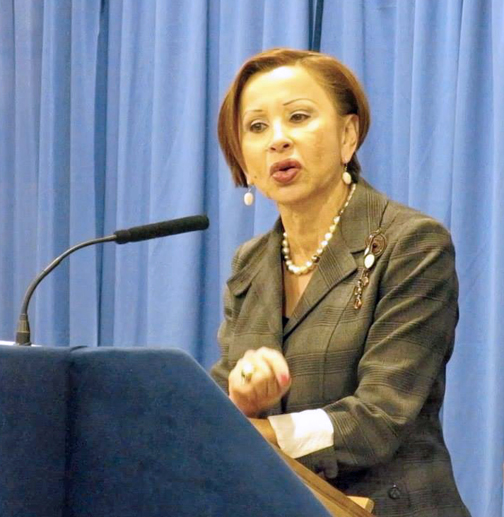
Rep. Nydia Velázquez, the first Puerto Rican woman elected to Congress, is the third most senior Democratic Member of the Financial Services Committee.
The U.S. House of Representatives approved Monday legislation authored by U.S. Rep. Nydia M. Velázquez (D-NY) to close a decades-old loophole that has caused significant financial losses for many Puerto Rican investors and retirees.
Velázquez’s bill, H.R.5322, would extend to investment companies operating in Puerto Rico and all the U.S. territories the same rules as those that apply on the U.S. mainland.
“For too long, this massive oversight in federal investment law meant that residents of Puerto Rico did not have the same consumer safeguards as are available on the mainland,” Velázquez said.
“The result has been that many retirees and others have suffered enormous losses on financial products they have been sold by unscrupulous companies,” she said.
The legislation, the “U.S. Territories Investor Protection Act,” was approved by voice vote with bipartisan backing. The U.S. Senate must now consider it. Velázquez, the first Puerto Rican woman elected to Congress, is the third most senior Democratic Member of the Financial Services Committee.
It has been publicly reported that some actors in Puerto Rico have used the current law’s loophole to act both as an underwriter for the issuance of bonds, and then repackaged those same bonds into mutual funds they sold exclusively to investors on the island.
While this type of arrangement is legal in Puerto Rico due to the 1940 exemption, it would be prohibited on the U.S. mainland.
The situation has been compounded by Puerto Rico’s ongoing debt crisis. Puerto Rican investors holding government bonds have suffered massive losses and are claiming that some financial companies did not properly disclose the risks of these funds, due to this conflict of interest.
“I’ve heard of people losing their hard earned savings because of these gaps in the law,” Velázquez said. “This bill would ensure statutory parity and prevent working families in Puerto Rico from being sold unsound investments that could not be marketed anywhere else in the U.S.”
At the time the exemption was created in 1940, it was suggested that Puerto Rico and other “U.S. possessions” were physically located too far away for the Investment Act protections to be enforced.
Since then both Hawaii and Alaska, which are farther away from the mainland than Puerto Rico, have been granted statehood and the protections in the 1940 Act. Additionally, air travel between the U.S. and Puerto Rico is common and many of these financial instruments are today traded electronically.
“It is absurd to suggest that we are unable to have a robust financial regulatory presence in Puerto Rico for geographical reasons,” Velázquez added. “All this exemption does today is enrich large financial companies at the expense of vulnerable retirees and working families.”