
Puerto Rico gov’t launches systems to cut lines, ease payments
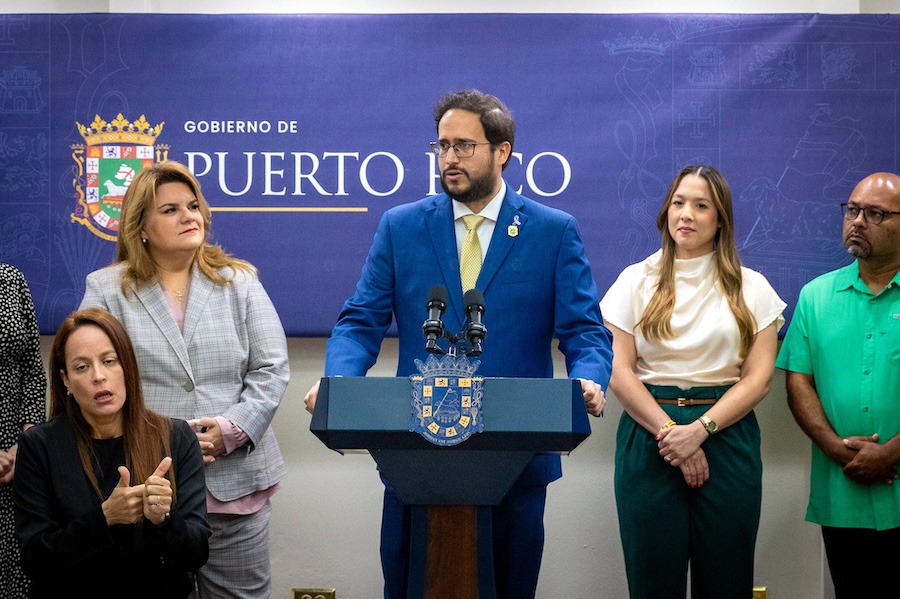
Puerto Rico Gov. Jenniffer González has announced three initiatives intended to simplify government transactions and make public services more accessible: Cesco Digital Cash, AutoExpreso Direct and a Fine Payment Plan. The programs, she said, will reduce wait times, modernize payment systems and make services easier to use for residents who rely on cash.
“One of the things we have looked for is how to reduce costs for the people and how we can reduce government costs,” González said during a news conference at the governor’s executive mansion, La Fortaleza. “And one of the great challenges we always have are the [long] lines to obtain services in government agencies.”
The governor noted that many Puerto Ricans still struggle to complete online transactions because they lack credit cards or bank accounts. Renewing a driver’s license or vehicle tag, or “marbete” in Spanish, she said, often requires standing in line and paying in cash.
“The majority of online transactions at Cesco Digital require a credit card, and you would be surprised if I told you that in rural areas six out of 10 people don’t have a bank account,” González said, citing a Mastercard study that found 53% of rural residents lack credit cards.
At Cesco (Drivers Service Center) offices, she added, four out of 10 visits are for buying marbetes or paying fines. “People have to take a day off work to do these things,” she said. “Today, we’re changing that.”
Cesco Digital Cash
The first program, Cesco Digital Cash, allows residents to complete transactions online but pay in cash at participating banks, cooperatives, pharmacies, gas stations and other authorized businesses. More than 250 payment points are already active, and the network is expected to expand to more than 1,000 locations in Puerto Rico, including Vieques and Culebra.
“Cesco Digital Cash means complete access so that the people can make their payments,” González said. The service will be available around the clock and will allow users to pay fines or purchase government-required stamps without visiting a Cesco office.
AutoExpreso Direct
The second program, AutoExpreso Direct, will expand payment options for Puerto Rico’s electronic toll system. Currently, payments are limited to 13 locations, mostly in the San Juan area. The new system will increase that number to about 1,000 points of payment, including on the outer islands.
“Before, people who needed to renew their AutoExpreso account could only do it at one of those 13 points,” González said. “Now, they can do it at banks, cooperatives, pharmacies, gas stations and other authorized businesses.”
Officials said the expansion, launching in November, will help reduce congestion at toll lanes and shorten lines at government service centers.
Fine Payment Plan
The third initiative, created under Act 52 of 2025, establishes a Fine Payment Plan that lets residents pay outstanding fines in installments and qualify for partial discounts.
“Many people who owed fines couldn’t pay them all at once,” González said. “Now, this new platform allows them to create payment plans online or in more than 500 physical locations.”
Government Efficiency Coordinator Verónica Ferraiuoli said the initiatives aim to simplify citizens’ interactions with the government.
“For years, citizens underwent duplicate processes and often had to travel long distances or depend on digital tools not everyone has access to,” she said.
Transportation Secretary Edwin González said the changes remove unnecessary steps.
“Today, with an application and a cash payment, you can stop by one of the 250 places across the island — soon to be over 1,000 — to make life easier for the people,” he said.
González said the reforms are part of her administration’s broader effort to modernize public services while ensuring that people without credit or internet access can still complete essential transactions.


Just moved from California to Puerto Rico… going through the process of obtaining my driver’s license….The process on line was pretty easy and efficient.. However I do not understand the process of the medical certificate..i took the certificate that was complete but there was no medical exam..not even an eye exam..Just checking why is this required?