
Doing business with China is inevitable

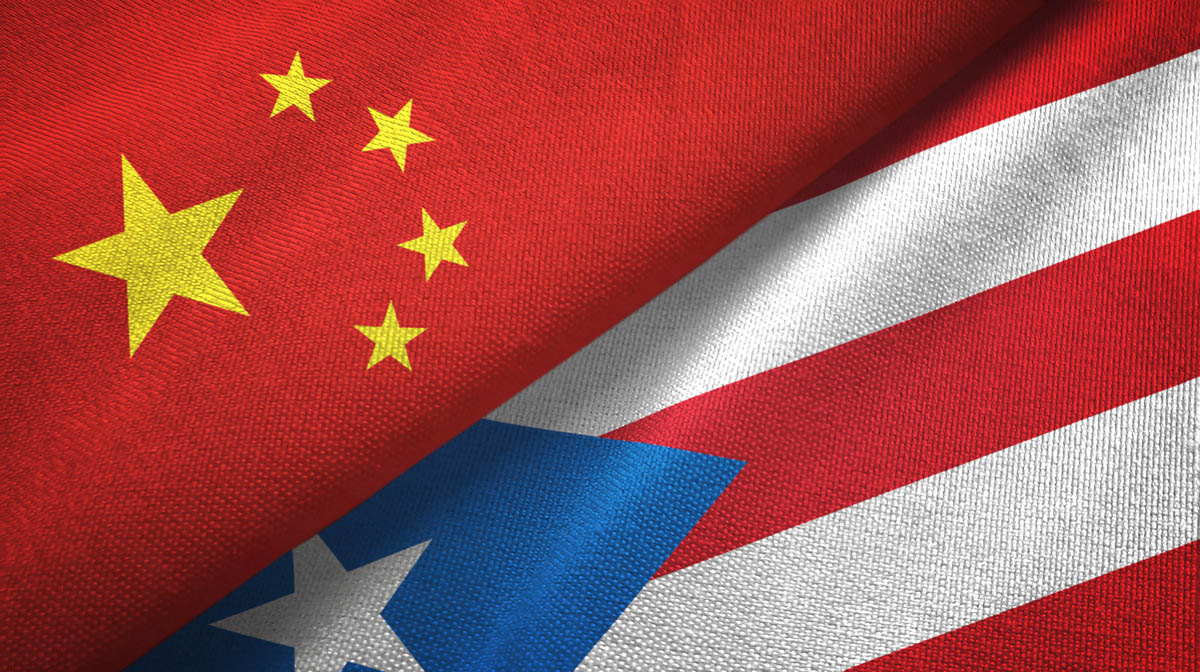
“Denial ain’t just a river in Egypt.” — often attributed to Mark Twain.
When Christopher Columbus set sail in 1492, “the Indies” was a broad European term encompassing East and Southeast Asia, including India, China, and the Spice Islands. His voyage sought a westward sea route to bypass land corridors controlled by rival powers and gain direct access to the lucrative silk and spice trade.
Setting aside the historical miscalculation, one fact remains unmistakable: Asia stood at the center of global trade and commerce in the 15th century.
There is a deep irony in the fact that this historical reality is once again staring us in the face. China has reemerged as a central node of global trade and economic gravity, yet the prevailing reaction in the United States — and in Puerto Rico — can largely be described as denial. Declaring an inconvenient reality untrue or refusing to acknowledge it does not make it disappear.
More often, denial functions as a psychological defense mechanism: a way to avoid the discomfort and anxiety that accompany profound shifts in global power.
What history repeatedly shows, however, is that much of the so-called West has long misunderstood China. A millennia-old civilization responsible for foundational innovations, philosophies and systems of governance continues to be judged through narrow Western lenses, filtered by ideological bias and cultural projection. This persistent misreading leads not only to flawed analysis but to misguided policy and missed opportunity.
To understand China, one must abandon simplistic labels and binary thinking. China is neither a temporary anomaly nor a system waiting to converge with Western norms; it is a unique, adaptive and historically grounded civilization-state pursuing stability, prosperity and global influence on its own terms.
James Bradley’s “The China Mirage” powerfully illustrates this point. Bradley argues that for more than a century, the United States has consistently misinterpreted China by projecting American values, religious impulses and strategic aspirations onto a complex and internally driven society.
Missionaries, business leaders, journalists and policymakers alike advanced a romanticized vision of China as a nation awaiting Western guidance or salvation. These illusions shaped U.S. policy from the late Qing dynasty through World War II and the Chinese Civil War, resulting in repeated strategic failures rooted not in Chinese behavior but in American self-deception.
A more contemporary corrective is offered by Spanish businessman Adrián Díaz-Marro in “21 Keys to Understanding China in the 21st Century.” Díaz-Marro argues that China cannot be understood through Western political, economic or cultural frameworks alone.
Instead, it must be interpreted through its own historical experience, civilizational logic, governance traditions and long-term strategic mindset. His work underscores the risks of oversimplification and ideological rigidity in an era defined by economic interdependence.
The lesson is clear: refusing engagement with China — or reducing it to moral posturing — invites strategic irrelevance. In contrast, informed, rules-based and security-conscious economic engagement allows the United States and Puerto Rico to protect national interests, leverage comparative advantages and navigate China’s rise with realism rather than denial. Selective and disciplined business interaction is not a concession; it is a necessity.
The inevitability of doing business with China lies in recognizing that China is not a fleeting geopolitical rival but a durable civilization-state that has successfully fused long-term governance, economic pragmatism and deep integration into global markets. Pretending otherwise does not protect American or Puerto Rican interests; it weakens them by ceding strategic ground to others who are willing to engage with discipline and clarity.
For policymakers and business leaders alike, the imperative is not blind engagement nor reflexive decoupling but strategic engagement: developing clear rules, safeguarding national security, investing in China literacy and identifying sectors where cooperation, competition or insulation best serve U.S. interests.
Puerto Rico, in particular, should view this moment as an opportunity to position itself as a sophisticated bridge within U.S.-aligned supply chains — capable of engaging Asia with realism, compliance and strategic intent.
In the 21st-century global economy, engagement with China is not optional; only the quality of that engagement remains a choice.

Jeffrey Quiñones-Díaz is a partner at The Consulting Lead LLC and works as a public affairs and policy consultant.


