
Puerto Rico Senate bill proposes new land-use definitions
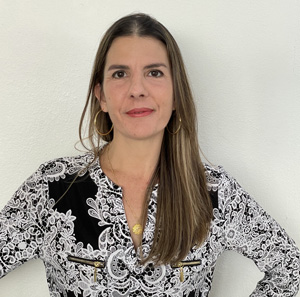
New Progressive Party Sen. Roxanna Soto-Aguilú has introduced Senate Bill 910, legislation that would revise key definitions in the Organic Act of the Puerto Rico Planning Board related to land use, zoning and environmental planning.
The measure proposes amendments to Article 3 of Act 75 of June 24, 1975, expanding the statutory definition of “land” and adding formal definitions for “rural zone,” “natural reserve zone” and “protected zone.” The bill has been referred to the Senate Committee on Planning, Permits, Infrastructure and Urbanism.
According to the bill’s statement of motives, the definitions that guide territorial planning in Puerto Rico were drafted decades ago and do not account for conditions such as climate change, urban expansion, digital infrastructure and evolving approaches to environmental management.
“The current definition of land is excessively basic and limited,” the measure states, arguing that existing law focuses primarily on land’s physical characteristics without addressing uses that incorporate renewable energy systems, water management technologies or climate-resilient designs.
Soto-Aguilú contends that the current statutory framework has contributed to inconsistent project evaluations, particularly for developments with ecological or multifunctional components. The bill cites examples in municipalities such as Ponce and Arecibo, where proposed projects on agricultural or coastal land have faced delays or litigation, which the legislation attributes to a lack of clarity in existing definitions.
Beyond redefining land, Senate Bill 910 seeks to address the absence of explicit statutory definitions for rural, natural reserve and protected zones. The measure states that rural areas, which it associates with agriculture, ecotourism and food production, remain vulnerable to urban expansion due to the lack of clearly defined boundaries in law.
Similarly, the bill argues that the absence of formal definitions for natural reserve and protected zones has complicated conservation efforts and the protection of fragile ecosystems. The legislation cites conditions such as mangrove degradation along the northern coast and the conversion of rural land in the island’s interior to residential use as examples raised in support of the proposal.
Under the bill, “land” would be defined to include subsoil, surface and groundwater, and immediate airspace, as well as land incorporating technological systems, provided they align with principles identified in the measure, including sustainability and territorial equity.
Rural zones would be defined as predominantly nonurbanized areas dedicated to agriculture, conservation and low-impact activities. Natural reserve zones would be subject to stricter protections for biodiversity and fragile ecosystems, while protected zones would include areas preserved for environmental, cultural, historical or scenic value, allowing only compatible uses.
The proposal references planning approaches used in jurisdictions such as Costa Rica and Spain, which the bill describes as examples of expanded land-use definitions that have been credited with strengthening sustainability and territorial equity.
If approved, the measure would authorize the Puerto Rico Planning Board to adopt regulations implementing the new definitions, in coordination with environmental and municipal agencies.


