
Report: Puerto Rico hurricane recovery may take until 2051

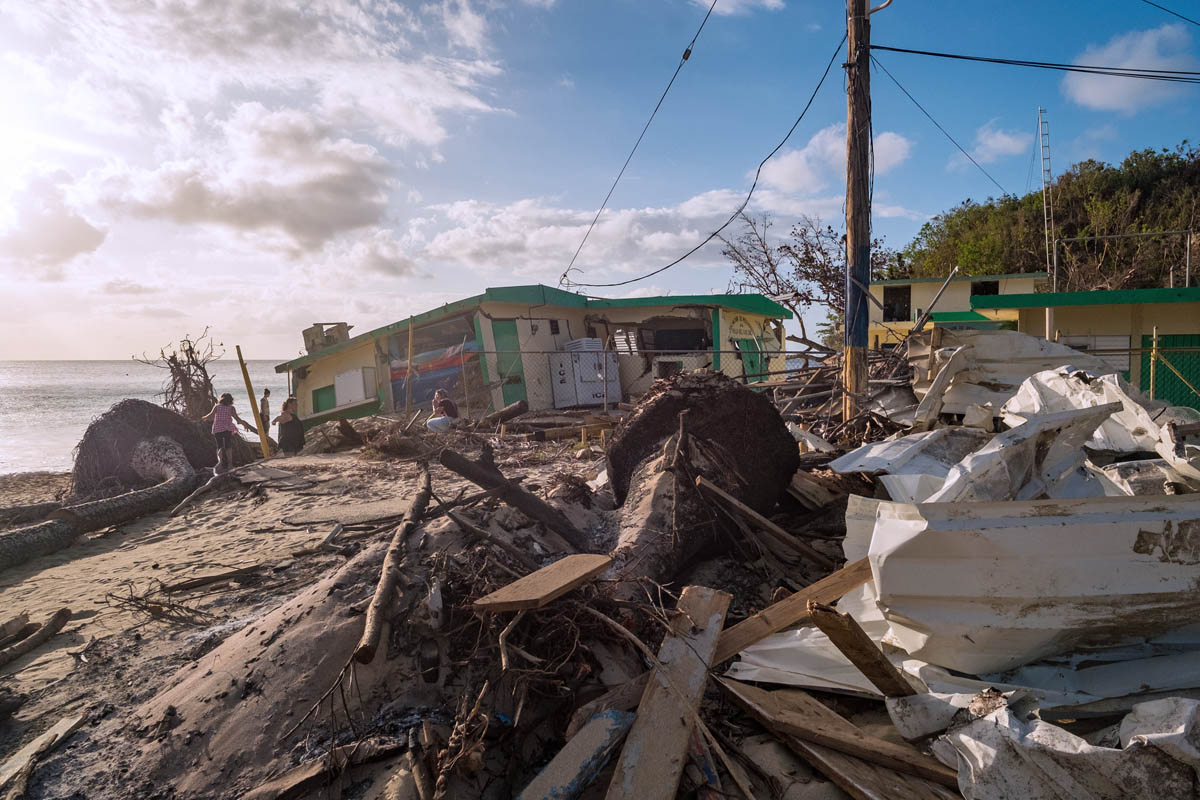
At the current pace, Puerto Rico’s recovery from hurricanes Maria and Irma will not be completed until 2051, according to a new report by RAND.
The report, “Accelerating Puerto Rico’s Disaster Recovery,” sponsored by the Puerto Rico Department of Housing, outlines key findings and recommendations aimed at speeding up the long-running recovery effort.
The authors identified inefficiencies in the disbursement of funds as the most significant factor slowing progress. They also found that the local workforce is insufficient to meet recovery demands and that inflation is likely to create major funding shortfalls, contributing to continued project delays.
“Process inefficiencies are likely the most significant factor preventing Puerto Rico from accelerating the recovery,” the report said. “Most notably, more than half the projects leaving the procurement-for-construction or design step move backward — not forward — in the process.”
Accelerating the recovery timeline to completion by 2033 would require tripling annual recovery activity compared with 2023 levels. According to the study, that would mean adding about 21,000 jobs beyond 2023 employment levels.
“Because of the time required to train mid- and high-skilled occupations, it is not practical to meet the demands of the recovery with only the local workforce,” the report said.
The authors also warned that inflation will likely result in significant funding gaps. They estimate an inflation-driven shortfall of about $5 billion, or 21%, of total funding under the Public Assistance Alternative Procedures program.
To address these challenges, the report recommends adopting a more centralized management structure to guide recovery efforts.
“Puerto Rico needs a strategic plan and streamlined processes to quickly address funding gaps, including a contingency fund for minor cost overruns,” the authors wrote.
Because recovery cannot be substantially accelerated using only local labor, the report recommends increasing reliance on mainland construction firms and workers to supplement local capacity.
Following are the report’s key recommendations:
- Have the governor appoint a single leader to oversee recovery efforts, with authority to set performance targets, enforce accountability, monitor progress, intervene in delays and prioritize projects. This central authority would be responsible for making decisions needed to move the recovery forward.
- Develop a strategic plan to address funding gaps, including reallocating funds from lower- to higher-priority projects, preallocating contingencies for cost overruns and establishing a process to quickly evaluate and resolve project shortfalls.
- Focus recovery funds on projects with significant long-term economic and social benefits, prioritize Public Assistance Alternative Procedures (PAAP or Section 428) projects because of inflation risk and emphasize higher-dollar projects to increase the disbursement rate.
- Reduce bonding requirements by up to 50% to increase participation by local contractors and reduce the number of no-bid situations.
- To meet recovery demands, increase reliance on mainland firms by easing licensing restrictions under Act 237 and offering large, bundled bid opportunities exceeding $100 million, with a gradual shift back to local firms as capacity expands.
- Ensure prompt payments to contractors and reduce administrative burdens to lower the risk premiums contractors are adding to recovery projects.
In response to hurricane damage, the Federal Emergency Management Agency has obligated more than $40 billion for Puerto Rico’s recovery, with an additional $30 billion allocated through other federal sources.
The research was sponsored by the Puerto Rico Department of Housing through a grant from the U.S. Department of Housing and Urban Development and conducted by RAND’s Disaster Management and Resilience Program within its Homeland Security Research Division.
RAND is a nonprofit, nonpartisan research organization based in Santa Monica, California. The RAND School of Public Policy is the oldest and largest public policy doctoral program in the U.S. and also offers master’s degrees in policy analysis, national security policy and technology policy.



No bid contracts will increase corruption. One of the problems we have on our island is that very few feel the need to work a full time job. Sorry but people just don’t want to work when you get free food and healthcare living in a semi tropical paradise. It seems that many are comfortable with just getting by today and not improving their lives and saving money for their retirement.