
Rethinking holiday spending for a more sustainable economy

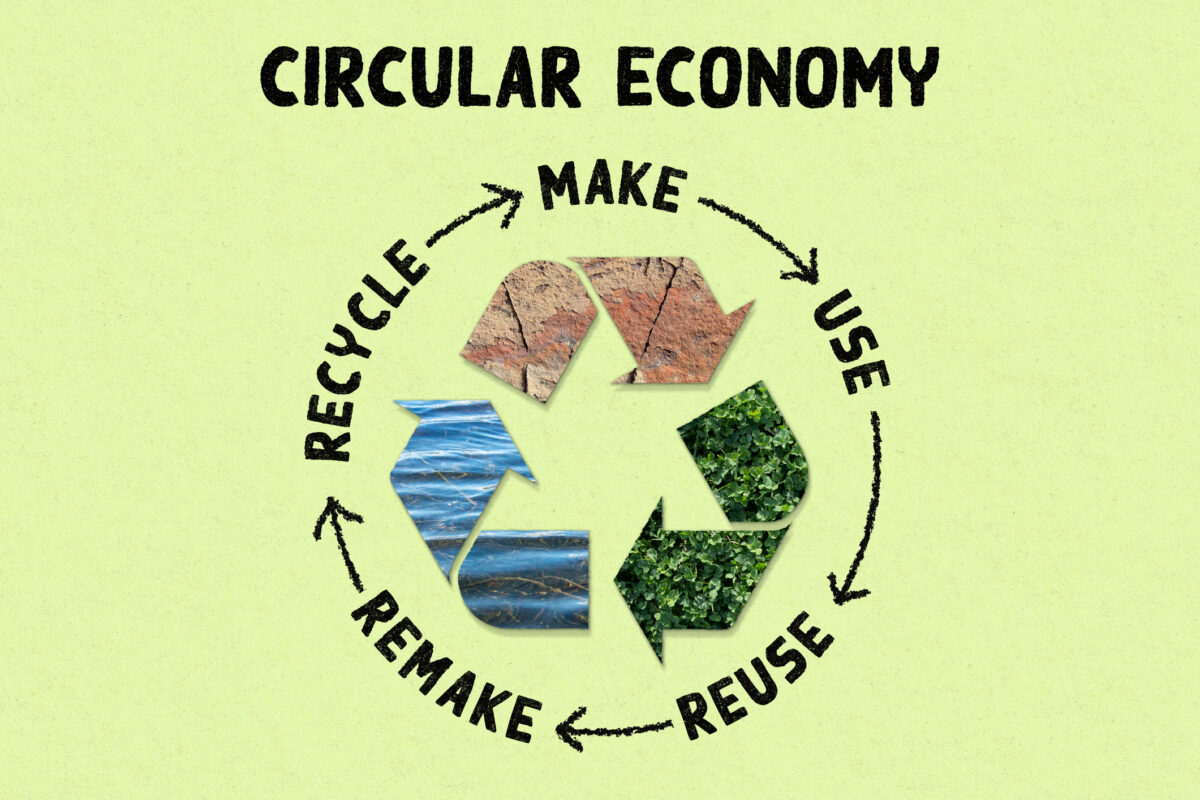
Linear, recycling, or circular economy: Which will you support this Christmas?
With the arrival of the holiday season comes the season of giving. In Puerto Rico, we tend to center our celebrations of December 24th and 25th and Three Kings Day on exchanging gifts with family and friends.
Furthermore, between Thanksgiving and Jan. 6th, our consumption patterns skyrocket: we buy more, generate more waste and justify all these excesses under the premise of tradition and the festive season.
But tradition doesn’t have to be at odds with sustainability. From the gift itself to the packaging, we can make choices that have a low environmental impact. At this time of year, we should ask ourselves: What economic model are we supporting when we give gifts? The traditional one, the one that discards; one that mitigates; or one that transforms?
The linear economy — produce, consume and discard — continues to dominate our holiday season. It’s convenient, immediate and designed for quick consumption. But its environmental cost is enormous. It consists of packaging that goes directly to the landfill, products with a short lifespan and a pattern that increases the use of energy, water and fuel.
“Buying for the sake of buying” is a model that is no longer sustainable for an archipelago with landfills and/or sanitary landfill systems at capacity and communities vulnerable to the environmental impacts of these operations.
The recycling economy is a step forward, but it’s still not enough. While more and more people in Puerto Rico are aware of the importance of recycling, our rates are still far below what was established by law more than three decades ago.
At Christmas, when the volume of boxes, paper and plastics increases, both commercially and residentially, the flow of waste arriving at the landfill increases. Using biodegradable or compostable materials is a good alternative. Recycling helps, but it doesn’t correct a model that continues to generate waste from the design stage.
The circular economy, on the other hand, proposes a different approach: buy less, choose better, buy secondhand and extend the useful life of what already exists. Decorate with what you have or exchange decorations. Give experiences instead of objects. Opt for local artisans and durable products. Repair before replacing. Reuse before discarding.
This model not only reduces waste; it strengthens the local economy and invites us to rethink what it truly means to give.
Christmas is a festive time when we share, celebrate and honor our loved ones. But it can also be a time when we are consistent with our values. Every purchase is a choice: we can either perpetuate high-impact, linear consumption or contribute to a circular and responsible transformation.
This holiday season, ask yourself: Do you want to give something that lasts or creates a joyful memory, or something that ends up in a garbage bag on its way to the landfill?See related story about this trend here.

Brenda Reyes-Tomassini is a public relations, community and government affairs consultant.


