

CNE: Gov’t will have 90 days to lay out fiscal plans
December 5, 2012
Come January, when the new administration headed by Gov.-elect Alejandro García-Padilla takes over the reins of the government, it will have 90 days or so to present stateside credit agencies a “viable and concrete” plan outlining its strategy to tackle Puerto Rico’s fiscal problems, executives from the Center for the New Economy said Tuesday.
chat_bubble0 Comment
visibility3813 Views

Puerto Rico needs to ‘refocus to find economic growth’
December 3, 2012
Puerto Rico’s current economy is smaller and less populated than when many of its legal and government structures were effected, making it necessary to refocus development policies to be able to move forward.
chat_bubble4 Comments
visibility5245 Views

Economists: ‘It will take Puerto Rico 6 years to recover’
November 30, 2012
Assuming that Puerto Rico’s economy were to grow at an annual rate of 1.75 percent starting in 2014, it would take six years for it to bounce back into pre-recession growth levels, local firm Estudios Técnicos predicted Thursday.
chat_bubble0 Comment
visibility4032 Views
Biopharma sector proposes solutions to its challenges
November 16, 2012
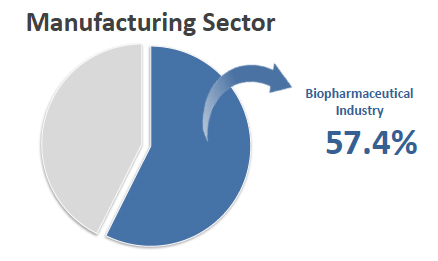
The biopharmaceutical industry is a major driver of Puerto Rico’s social and economic development, not just for the 86,000 direct and indirect jobs its creates, but for the multiplier effects it has upon other sectors.
chat_bubble3 Comments
visibility3999 Views
Private sector makes post-elections call for unity
November 8, 2012
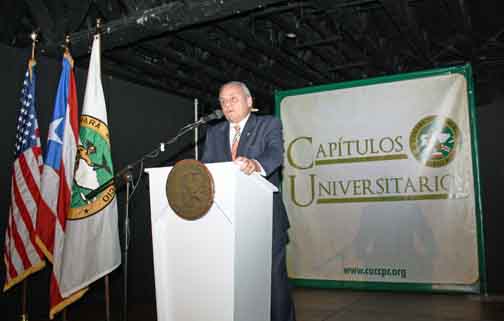
Now that the dust has settled on one of Puerto Rico’s most contentious political campaigns and elections, the island’s private sector is hopeful that government officials, especially Governor-elect Alejandro García-Padilla, will set aside partisan bickering to work together to re-energize and move the economy forward.
chat_bubble1 Comment
visibility3693 Views
Op-Ed: The governor’s immediate economic agenda
November 8, 2012
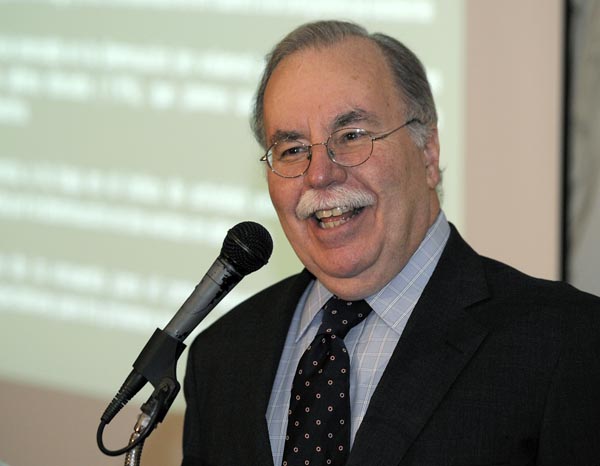
Puerto Rico Governor-elect Alejandro García-Padilla will be undertaking an administration facing a very difficult scenario, with severe resource restrictions.
chat_bubble0 Comment
visibility2893 Views

Report(e): In these elections, economy rules the vote
October 29, 2012
In very few elections will the economy be so present in the minds of Puerto Rico voters as in the one coming up Nov. 6.
chat_bubble2 Comments
visibility4009 Views

‘Doing Business’ report offers mixed review for Puerto Rico
October 24, 2012
Puerto Rico is the best place in Latin America and the Caribbean to start a business and gain access to credit and is outranked only by Chile in the overall ease of doing business, according to the “Doing Business 2013: Smarter Regulations for Small and Medium-Size Enterprises” report released Tuesday by the IFC and World Bank.
chat_bubble0 Comment
visibility3676 Views

Op-Ed: GDB’s response to CNE’s ‘open letter’
October 18, 2012
The Government Development Bank for Puerto Rico is proud of its long tradition of professional management, transparent corporate governance and utmost respect toward the investor community and the people at large.
chat_bubble0 Comment
visibility3533 Views

Op-Ed: CNE’s open letter to Puerto Rico’s GDB
October 17, 2012
The lack of seriousness and responsibility reflected by the comments made by the president of the Government Development Bank of Puerto Rico are truly disturbing.
chat_bubble3 Comments
visibility4322 Views

Op-Ed: Is the recession ending or is it over?
October 11, 2012
During the past 12 months, Puerto Rico’s economic activity has gained ground, as the recession is no longer deepening. This scenario is in addition to the appearance of the first signs of an early recovery stage — albeit moderate — and seeing the first pieces of evidence indicating that the recession is over.
chat_bubble0 Comment
visibility3029 Views
Op-Ed: Supply chain-driven development
October 9, 2012
One of the many consequences of globalization, and of the technological change that to a significant extent made it possible, is that the meaning of terms used in economic development has changed.
chat_bubble0 Comment
visibility3980 Views
Op-Ed: Torturing employment data
October 8, 2012
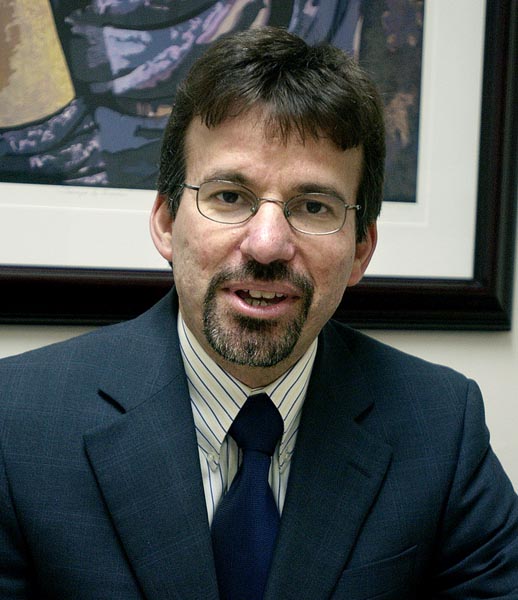
Dr. John Stewart, who worked for many years as an economic advisor at the Puerto Rico Industrial Development Company, used to say that if you tortured the statistics long enough, they would tell you what you wanted to hear.
chat_bubble0 Comment
visibility3178 Views
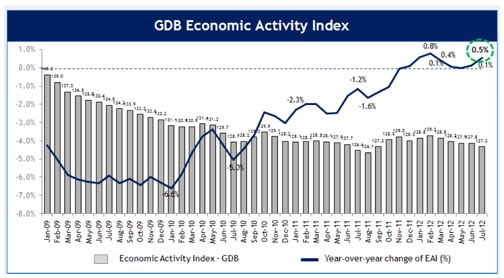
Economic Activity Index stays on positive ground in July
September 28, 2012
The Government Development Bank unveiled the Economic Activity Index (GDB-EAI) for the month of July, which settled at 127.3, reflecting a 0.5 percent year-over-year increase.
chat_bubble0 Comment
visibility3538 Views

FirstBank hosts educational talk for small-, mid-sized businesses
September 21, 2012
As part of its ongoing support of Puerto Rico’s small and medium businesses, FirstBank offered a seminar Wednesday night to its business customers on "Opportunities for entrepreneurs within the new tax frame," conducted by CPA Gabriel Hernandez of the BDO Puerto Rico accounting firm.
chat_bubble0 Comment
visibility3432 Views

A Dow Jones/Factiva content provider since 2014

Subscribe to our Dollars & Sense podcast!

NIMB ON SOCIAL MEDIA